
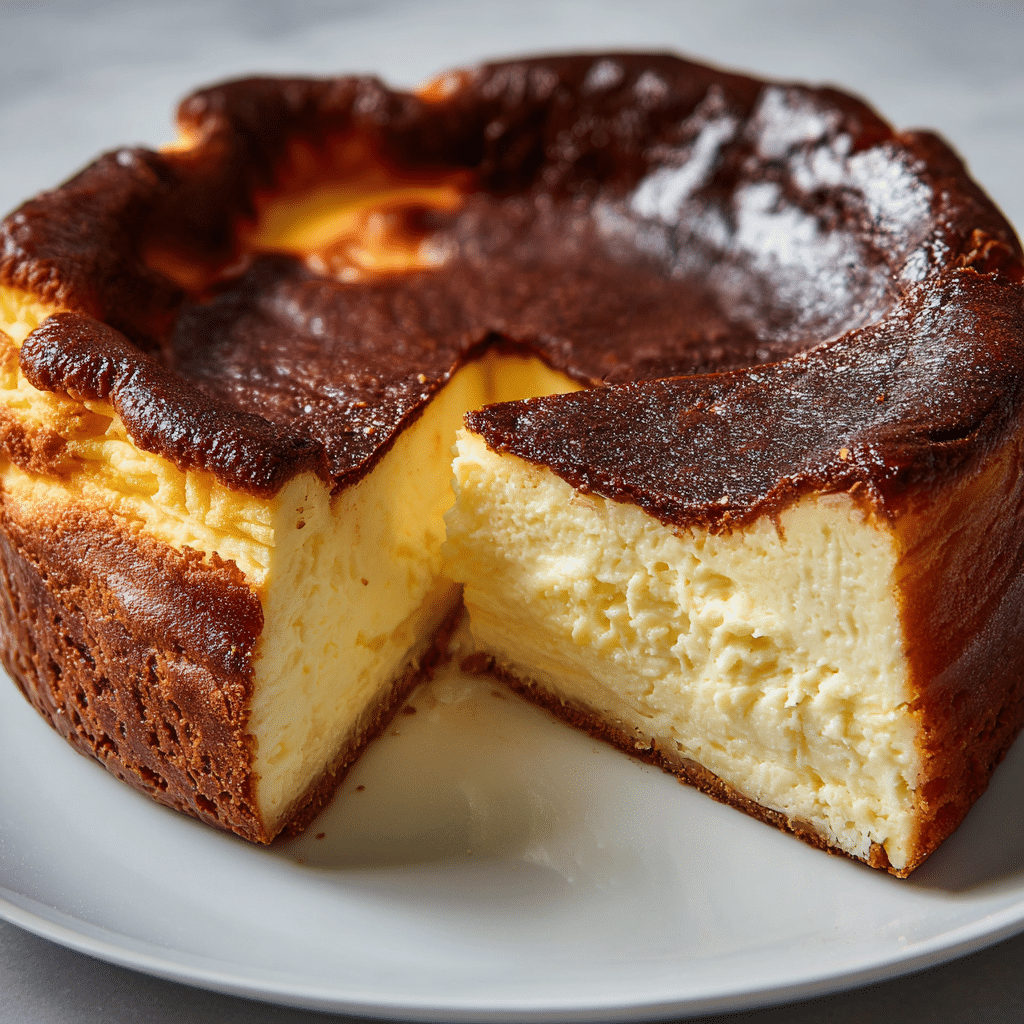
Discover the rich, creamy delight of Burnt Basque Cheesecake, a dessert beloved for its deeply caramelized crust and irresistibly silky center. This unique cheesecake originated in Spain and quickly won hearts worldwide thanks to its bold flavors and simple ingredients. Unlike traditional cheesecakes, Burnt Basque Cheesecake features a beautifully burnt top that adds a subtle bitterness to balance its sweet, velvety interior, creating a truly unforgettable taste experience.
Why You’ll Love This Recipe
- Effortless Elegance: This cheesecake requires just a handful of basic ingredients yet delivers a sophisticated flavor profile.
- Distinctive Texture: The contrast between the caramelized crust and creamy inside is a game-changer for cheesecake lovers.
- No Crust Needed: Skip the time-consuming crust prep with this simple, crustless design that still packs plenty of flavor.
- Quick to Make: With minimal preparation and baking time, it’s perfect for spontaneous dessert cravings.
- Versatile Dessert: Whether for a casual family treat or a stylish dinner party finale, it fits any occasion.
Ingredients You’ll Need
The beauty of Burnt Basque Cheesecake lies in its stripped-back ingredients, each carefully chosen to create the perfect blend of creaminess, sweetness, and that signature burnt flavor. Every component plays a key role in achieving that luscious texture and golden-brown top.
- Cream Cheese: The main ingredient that gives the cheesecake its rich and smooth body.
- Heavy Cream: Adds silkiness and richness, enhancing the creamy palate.
- Sugar: Sweetens the cheesecake and helps develop the caramelized crust.
- Eggs: Bind the mixture while providing the structure that lets it hold its shape flawlessly.
- Flour: Just a touch to maintain stability without overwhelming the softness.
- Vanilla Extract: A small addition that lifts the flavors with aromatic warmth.
Variations for Burnt Basque Cheesecake
This dessert is wonderfully adaptable, so feel free to get creative with your Burnt Basque Cheesecake. Whether you want to adjust sweetness levels, add a new flavor twist, or meet dietary needs, you’ll find options that make the recipe your own.
- Chocolate Infusion: Add melted dark chocolate to the batter for a rich mocha twist.
- Citrus Zest: Mix in lemon or orange zest to brighten up the deep caramel flavors.
- Gluten-Free Swap: Replace wheat flour with almond flour or cornstarch for a gluten-free version.
- Vegan Alternative: Use vegan cream cheese, coconut cream, and flax eggs to make it plant-based.
- Spiced Variation: Incorporate ground cinnamon or cardamom for a cozy, warm flavor profile.

How to Make Burnt Basque Cheesecake
Step 1: Prepare the Pan and Oven
Preheat your oven to a high temperature, typically around 400°F (200°C), and line a springform pan or cake tin with parchment paper, ensuring the paper extends above the rim. This height prevents overflow and allows the cheesecake to rise beautifully.
Step 2: Blend the Ingredients
In a large bowl, beat the cream cheese until smooth and creamy. Add sugar and continue mixing until combined, then incorporate eggs one at a time. Gently fold in the heavy cream and vanilla extract, followed by a light dusting of flour to bind the mix without toughening it.
Step 3: Pour and Bake
Pour the batter into your prepared pan and smooth out the top. Place it in the oven on the middle rack and bake for about 50 to 60 minutes, or until the top has developed a deep golden-brown color and the center still jiggles slightly.
Step 4: Cool and Chill
Allow the cheesecake to cool at room temperature. Then refrigerate it for at least four hours or overnight. This resting time helps the texture to set firmly while keeping the luscious creaminess inside.
Pro Tips for Making Burnt Basque Cheesecake
- Use Full-Fat Ingredients: For maximum creaminess and flavor, always opt for full-fat cream cheese and heavy cream.
- Don’t Overmix: Mix just until combined to keep the texture light and avoid incorporating too much air.
- High Heat is Key: Baking at a high temperature creates that iconic burnt top and caramelized flavor.
- Line Pan Generously: Parchment paper that extends well above the pan edges helps contain the batter while it rises.
- Let It Cool Properly: Cooling slowly and chilling overnight are essential steps to achieve the perfect creamy consistency.
How to Serve Burnt Basque Cheesecake
Garnishes
A simple dusting of powdered sugar or a few fresh berries can brighten up the rustic look of Burnt Basque Cheesecake beautifully. For extra indulgence, drizzle honey or a fruit compote on top.
Side Dishes
Pair with a scoop of vanilla ice cream or a dollop of lightly whipped cream to complement the richness. Fresh fruits, such as raspberries or sliced figs, add a refreshing contrast.
Creative Ways to Present
Cut the cheesecake into thick wedges to showcase the contrast between the burnt top and the soft interior. Serve it on wooden boards for a rustic feel or with elegant plates and minimalist styling for a modern look.
Make Ahead and Storage
Storing Leftovers
Store your Burnt Basque Cheesecake covered in the refrigerator for up to 4 days. Wrap it tightly with plastic wrap or store it in an airtight container to maintain moisture and prevent odors.
Freezing
This cheesecake freezes well for up to 2 months. Wrap individual slices in plastic wrap and place them in a freezer bag. Thaw in the refrigerator overnight before serving for the best texture.
Reheating
To enjoy warm cheesecake, reheat slices gently in a low-temperature oven (about 300°F or 150°C) for 10 minutes or until just warmed through. Avoid microwaving to maintain the texture.
FAQs
What makes Burnt Basque Cheesecake different from traditional cheesecake?
Burnt Basque Cheesecake is unique due to its burnt, caramelized top and crustless design, offering a creamy, custard-like center with a hint of smoky bitterness unlike the smooth, baked crust of traditional cheesecakes.
Can I use a regular cake pan instead of a springform pan?
Yes, you can use a regular cake pan lined with parchment paper, but a springform pan makes it easier to release the cheesecake without damaging its delicate texture.
Why is the top of the cheesecake burnt?
The high baking temperature causes the sugars and fats on the surface to caramelize deeply, creating the signature burnt crust that balances sweetness with a slight bitterness.
How long should I chill the cheesecake before serving?
Chilling the Burnt Basque Cheesecake for at least 4 hours or overnight is recommended to allow the center to set properly for that creamy texture.
Can I prepare the batter ahead of time?
It’s best to bake the batter fresh for optimal texture and rise, as the eggs and cream interact best immediately after mixing.
Final Thoughts
If you’ve never tried Burnt Basque Cheesecake before, you’re in for a delightful surprise. Its rich, creamy center paired with a perfectly caramelized top offers a flavor journey like no other. Give this recipe a try—you might just find it becoming your new favorite dessert to share with friends and family.