
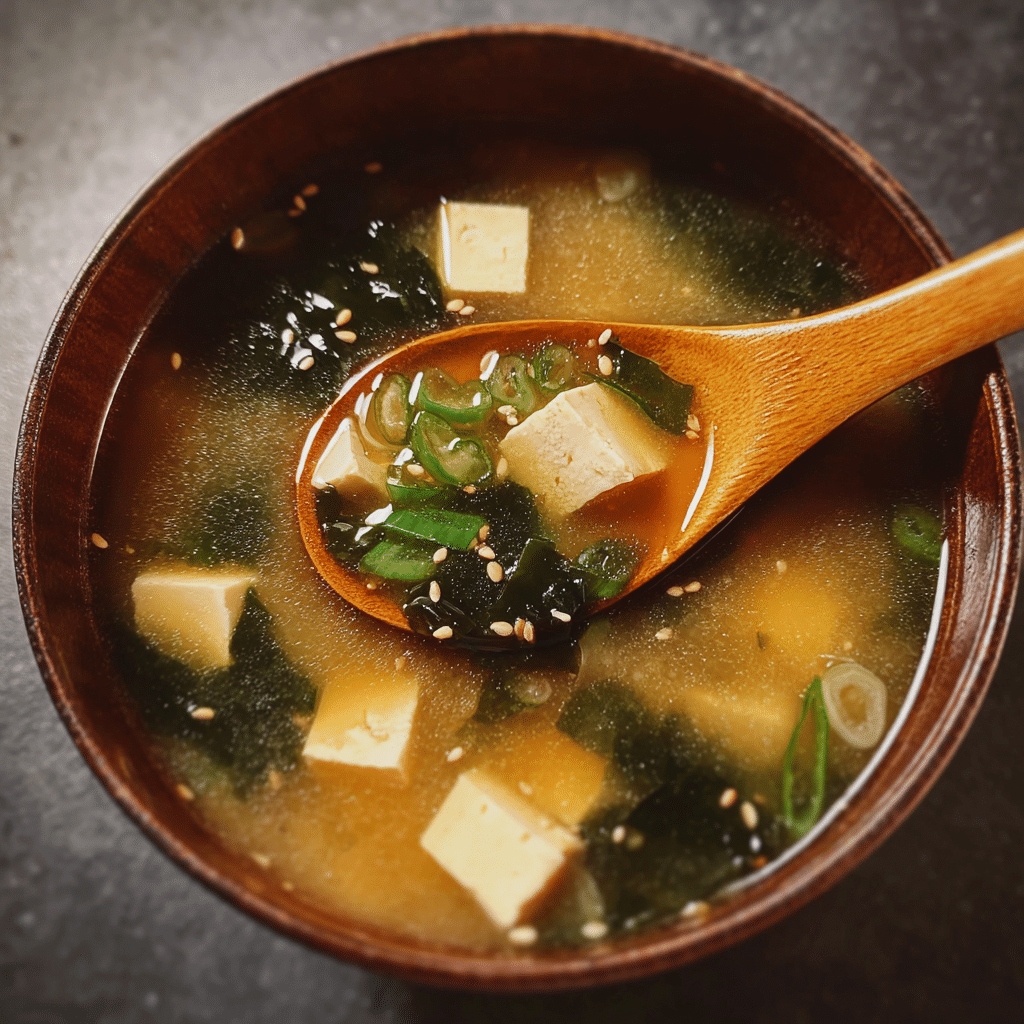
Miso Soup is the ultimate comfort dish that effortlessly blends rich, savory flavors with a simple preparation process, making it a warm and soothing experience every time you enjoy it. This traditional Japanese soup combines fermented miso paste with dashi broth and a handful of fresh ingredients, offering a nourishing bowl that’s as satisfying as it is easy to make. Whether you’re looking for a light starter or a calming meal to relax with, Miso Soup hits all the right notes to revive your spirit and delight your taste buds.
Why You’ll Love This Recipe
- Quick and Easy Preparation: Miso Soup comes together in minutes with minimal ingredients and straightforward steps.
- Comforting Warmth: The soothing broth warms you from the inside out, perfect after a long day or on chilly evenings.
- Rich umami flavors: Thanks to fermented miso and dashi, this soup offers a deep, savory taste that feels indulgent but not heavy.
- Highly Nutritious: Packed with probiotics, protein, and antioxidants, it supports digestion and overall well-being.
- Versatile Ingredients: Easily adaptable to include vegetables, tofu, or seaweed based on your pantry or dietary needs.
Ingredients You’ll Need
This soup showcases simple yet essential ingredients that create a balanced harmony of taste, texture, and color. Each element plays a key role, making Miso Soup both delicious and visually inviting.
- Miso Paste: The star ingredient that delivers the signature tangy and savory flavor, preferably white or yellow miso for mildness.
- Dashi Broth: A light Japanese stock made from kombu (kelp) and bonito flakes, providing a complex umami base.
- Tofu: Soft or silken tofu adds creaminess and protein while absorbing the broth flavors beautifully.
- Wakame Seaweed: Adds a delicate texture and earthy ocean notes, plus a lovely green color.
- Green Onions: For freshness and mild pungency, sprinkled on top as a vibrant garnish.
- Water: The essential medium that blends with dashi and miso to create the perfect broth.
Variations for Miso Soup
One of the best things about Miso Soup is how easily it can be customized. Whether you want to suit different diets, try new flavors, or up the nutrition game, these variations keep your kitchen creativity flowing.
- Vegetable Boost: Add sliced mushrooms, shredded carrots, or baby spinach to enhance the texture and nutrients.
- Protein Upgrade: Swap tofu for cooked chicken breast or shrimp for a heartier version.
- Spicy Twist: Stir in a spoonful of chili oil or sprinkle red pepper flakes for a gentle heat kick.
- Gluten-Free Option: Use gluten-free miso paste and a dashi made without soy sauce to keep it safe for sensitive diets.
- Vegan Version: Use kombu-only dashi, omitting bonito flakes, and choose miso without animal products.

How to Make Miso Soup
Step 1: Prepare the Dashi Broth
Begin by soaking kombu in cold water for about 30 minutes, then gently bring it to a simmer. Remove the kombu just before the water boils. Add bonito flakes, simmer briefly, then strain to obtain a clear, flavorful dashi broth.
Step 2: Heat the Dashi
Warm up the prepared dashi broth over medium heat, ensuring it’s hot but not boiling to preserve the delicate flavors.
Step 3: Dissolve the Miso Paste
In a separate bowl, mix a few spoonfuls of the warm dashi with your desired amount of miso paste to create a smooth slurry. Gradually stir this back into the pot so the soup remains smooth and flavorful without clumps.
Step 4: Add Tofu and Wakame
Gently add cubed soft tofu and rehydrated wakame seaweed to the soup, allowing them to warm through in the broth without stirring vigorously.
Step 5: Garnish and Serve
Remove from heat and pour the soup into bowls. Top with thinly sliced green onions and serve immediately for the freshest taste.
Pro Tips for Making Miso Soup
- Choose Miso Carefully: Different types of miso offer varying flavors; white miso is milder, while red miso is more robust.
- Avoid Boiling After Adding Miso: Boiling can kill beneficial probiotics and alter the flavor; a gentle heat is best.
- Make Your Dashi Fresh: Freshly made dashi elevates the umami depth far beyond store-bought cubes or powders.
- Use Silken Tofu: Its soft texture complements the broth perfectly and creates a wonderful mouthfeel.
- Rehydrate Wakame Properly: Soak dried wakame in cold water to achieve the right texture before adding to the soup.
How to Serve Miso Soup
Garnishes
Fresh green onions give a crisp contrast to the smooth broth, while adding a sprinkle of toasted sesame seeds or a few drops of chili oil offers extra texture and flavor depth.
Side Dishes
Miso Soup pairs beautifully with steamed rice, pickled vegetables, or light sushi rolls, creating a harmonious, balanced meal.
Creative Ways to Present
Serve Miso Soup in traditional lacquer bowls with wooden spoons for an authentic feel, or add a colorful sprinkling of microgreens or edible flowers to impress your guests visually.
Make Ahead and Storage
Storing Leftovers
Keep leftover Miso Soup in an airtight container in the refrigerator for up to 2 days. Note that tofu and seaweed may soften over time but flavors intensify.
Freezing
It’s best to avoid freezing Miso Soup, especially with tofu and seaweed, as they can become grainy or mushy when thawed.
Reheating
Reheat gently on the stove without boiling, stirring occasionally to maintain texture and prevent the soup from becoming bitter or losing probiotic benefits.
FAQs
What type of miso paste is best for Miso Soup?
White miso is typically preferred for its mild, sweet flavor, making it ideal for a comforting and delicate Miso Soup, but feel free to experiment with yellow or red miso for a stronger taste.
Can I make Miso Soup without dashi broth?
While dashi adds authentic umami depth, you can use vegetable broth as a base for a vegetarian or vegan alternative, although the flavor profile will differ slightly.
Is Miso Soup healthy?
Yes, Miso Soup provides probiotics from fermented miso, is low in calories, rich in vitamins and minerals, and supports digestive health when prepared and consumed fresh.
How long does Miso Soup last in the fridge?
Stored properly in a sealed container, Miso Soup stays good for about two days; beyond that, the quality and flavor may decline.
Can I add noodles to Miso Soup?
Absolutely! Adding soba, udon, or rice noodles can make the soup more filling and add another texture dimension for a delightful meal.
Final Thoughts
Whether you’re new to Japanese cuisine or simply craving something warm and nurturing, Miso Soup is a timeless comfort dish that never disappoints. Its simplicity, depth of flavor, and health benefits make it a must-try recipe to keep in your cooking rotation. So grab your ingredients and enjoy the cozy embrace of this wonderful soup today!